 The Terrace Times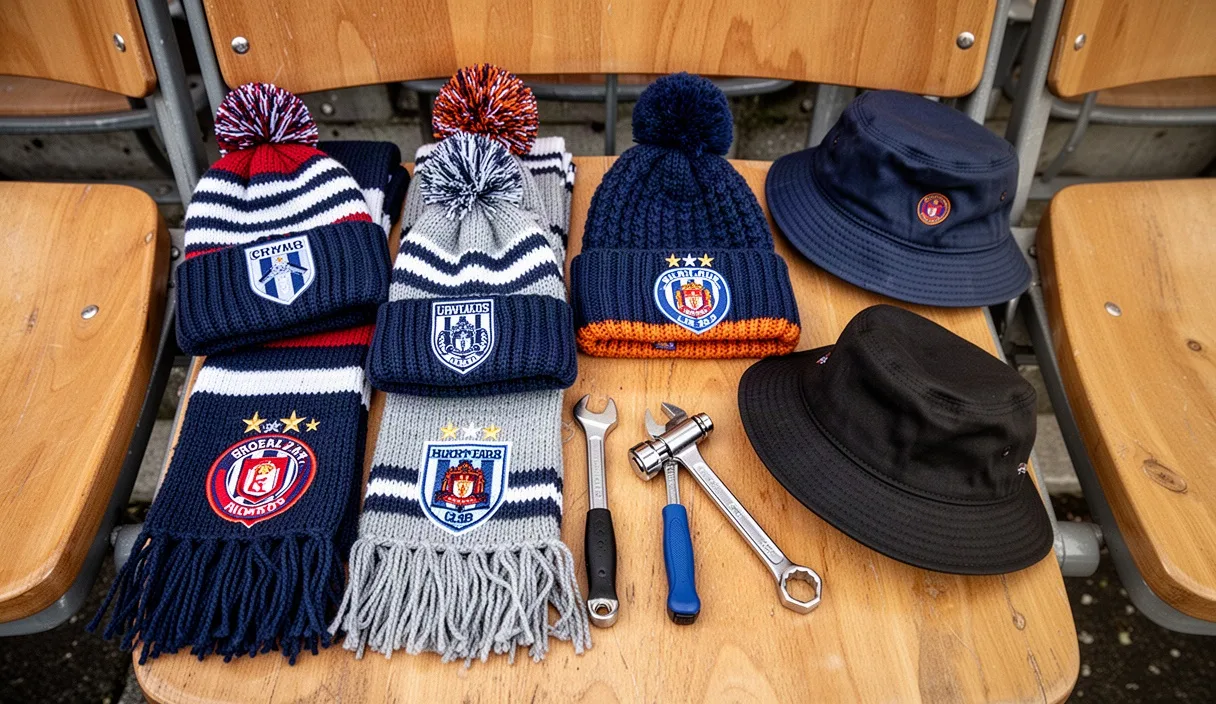
Stand outside any ground twenty minutes before kick-off and you'll see the same three shapes bobbing through the turnstile queue: the long knitted scarf wound twice round the neck, the bobble hat pulled down over the ears, and, increasingly, the bucket hat perched at an angle that suggests fashion rather than function. Each one tells you something about the wearer, the season and sometimes the decade they grew up watching football in.
This isn't just a style piece for the sake of it. Headwear on matchday is a genuine practical decision, especially if you're standing on an open terrace in Sheffield in January or sat in a plastic seat with no roof cover in August. We've pulled together what actually works, what's tradition for tradition's sake, and what you should be packing depending on the fixture in front of you.
The Traditional Scarf and Why It's Still the Default
The scarf has been the default matchday item since clubs started printing their colours onto wool sometime in the 1950s and 60s, and it remains the first thing most supporters' shops sell out of before a cup final. Part of that is sentiment: a scarf bought at your first match, or handed down from a parent, carries weight that a bobble hat rarely does. Part of it is simply that a scarf works for almost every occasion, hot or cold, because you can loosen it, tie it, or stuff it in a coat pocket without much fuss.
Functionally, a scarf's real job is blocking wind at the neck, which is where most people lose heat fastest when they're standing still for ninety minutes plus stoppage time. A double-loop wind round the throat does more for comfort than most people credit it for, particularly at exposed grounds like a seaside ground where the wind comes straight off the water.
Scarves also do something no hat can: they get held aloft. Photographs of packed ends with scarves raised before kick-off are part of matchday folklore at plenty of clubs, and that ritual simply doesn't transfer to headwear. A bobble hat waved in the air looks like someone's lost it in the wind, not a show of unity.
The trade-off is that a scarf does nothing for your head or ears, so on the coldest days it's rarely enough on its own. Most experienced away-day regulars treat the scarf as the constant, then layer a hat on top of it when the forecast demands it.
Bobble Hats and the Terraces They Came From
The bobble hat's association with football terraces goes back to the standing-only decades before all-seater stadiums became mandatory in the top two English divisions following the Taylor Report in the early 1990s. Standing for two hours in an open end with no roof meant heat loss through the head became a real problem, and a thick knitted hat with a bobble on top, often hand-knitted by a relative in club colours, was the practical answer long before it was a retro fashion statement.
The physics haven't changed. A wool or acrylic bobble hat traps warm air against the scalp far better than a scarf ever could, and for supporters on terraces at non-league grounds, where standing areas still exist across most of the National League System, that head coverage matters more than people who only sit in modern stands might realise.
There's also a tribal element to the bobble hat that's grown rather than faded. Clubs now sell bobble hats in home and away colours as standard merchandise, and away-day regulars often collect one per season, treating them almost like a badge of which campaign they followed the team through. A hat from the promotion season sits differently in the drawer to one from a forgettable mid-table year, even if nobody else would know the difference just by looking at it.
One practical note: a genuine wool bobble hat gets heavier and smells damp if it's rained on and stuffed straight into a bag, so most fans who've had one for a few seasons know to let it dry out properly before the next away trip, otherwise you're pulling on a cold, wet hat the following week.
Bucket Hats and Their Recent Comeback
The bucket hat's return to grounds over roughly the past six or seven years owes more to streetwear culture than to football tradition, and most supporters over forty will tell you it wasn't part of the matchday wardrobe when they started going. Its resurgence tracks alongside casual and terrace-culture fashion brands that print club-adjacent designs, often sold outside the official club shop rather than through it.
Functionally, the bucket hat is a compromise. The wide brim gives some shade and keeps light rain off the face better than a bobble hat does, which makes it a reasonable choice for an August or September fixture with an early kick-off and a bit of sun. What it doesn't do well is cover the ears or trap heat, so on a cold December night it's closer to decorative than useful.
There's also a generational split worth noting. Younger supporters, particularly those active on matchday social media and in casual clothing circles, have adopted the bucket hat as part of a wider look, paired with a quarter-zip and cargo trousers rather than a traditional scarf and coat. Older regulars sometimes view it as fashion overtaking function, though plenty concede it looks sharp for a day fixture.
- Best suited to: daytime fixtures, mild weather, festival-style away days where you're walking a fair distance from the station to the ground.
- Less suited to: evening kick-offs after October, exposed away ends, anything with a forecast below 8°C.
Warmth, Weight and Practicality Compared
Putting the three side by side, the differences come down to coverage, packability and how they behave once the weather turns properly bad rather than just a bit chilly.
| Item | Warmth | Packs down easily | Handles rain | Typical cost |
|---|---|---|---|---|
| Scarf | Moderate, neck only | Yes, rolls small | Poor once soaked | £12 to £20 |
| Bobble hat | High, full head coverage | Yes, but bulkier | Fair if wool, poor if soaked through | £15 to £25 |
| Bucket hat | Low | Yes, flattens easily | Good for light rain, brim sheds water | £18 to £35 |
A detail worth flagging: cheap acrylic versions of any of the three lose their shape and warmth after repeated soakings far quicker than wool or a wool-acrylic blend, so if you're a regular away traveller it's worth spending the extra few pounds on a blend rather than replacing a bargain hat every season.
Weight matters too if you're travelling by coach or train with limited bag space. A scarf and a bucket hat both fold flat into a jacket pocket, while a proper bobble hat with a thick weave takes up noticeably more room, which sounds trivial until you're trying to fit it alongside a programme, a flask and match tickets in a small bag.
What Each One Says About Where You Stand
There's an unspoken code at most grounds about what headwear signals, even if nobody would ever say it out loud on the concourse.
A scarf worn the traditional way, tied at the neck rather than pulled over the head, generally reads as classic support, the kind of fan who's been coming for years and treats the item as identity rather than outfit. A bobble hat, especially a well-worn one in fading colours, tends to read as terrace-culture loyalty, often associated with standing sections, lower-league grounds, or older fans who've kept the same one since a promotion season a decade back.
The bucket hat, by contrast, generally signals a younger, more fashion-conscious crowd, often connected to casual culture or matchday social media accounts, and it's rarely seen at all in the coldest months simply because it doesn't do the job then. None of this is a hard rule, plenty of fans mix and match depending on mood, but the general pattern holds across most English grounds from the Premier League down to step four of the non-league pyramid.
Choosing Gear for a Winter Away Day Versus a Summer Friendly
The sensible approach is to match the item to the fixture rather than picking one thing and sticking with it all season.
- For a December or January away day at an exposed ground, take a wool bobble hat as the primary item and a scarf as backup for the neck. Check the forecast the night before and add gloves if it's forecast below 3°C.
- For a pre-season friendly or an August opener with a lunchtime kick-off, a bucket hat is the more sensible pick, since it gives shade without overheating your head under a warm sun.
- For a standard autumn or spring fixture with mild, unpredictable weather, a scarf alone often covers it, with a folded bucket hat or thin beanie kept in a bag pocket as insurance against a sudden shower.
- If you're travelling to an unfamiliar ground, ask a local supporter or check the club's official social media in the days before, since some stands are far more exposed to wind than others even within the same city.
Common Mistakes
The most frequent error is packing only one item and assuming it'll cover every scenario, then getting caught out when an evening kick-off turns colder than the afternoon forecast suggested. A second common mistake is buying the cheapest acrylic hat available purely because it has the club crest on it, then finding it's lost its shape and warmth within a season of regular wear. Finally, some fans wear a bucket hat under the mistaken impression it'll keep ears warm on a cold night, when its brim and shape simply weren't designed for that job.
Next Steps
If you're building a matchday kit bag from scratch, start with a decent wool-blend scarf in club colours, since it covers the widest range of conditions and doubles as the item most tied to tradition. Add a proper bobble hat for the winter run of fixtures, ideally wool rather than pure acrylic, and treat a bucket hat as a warm-weather extra rather than a year-round essential. Check the specific ground's exposure, roof coverage and typical wind before a first visit, and if in doubt, layer: a scarf under a coat with a hat in the bag costs nothing extra to carry and means you're never caught short at kick-off.