 The Terrace Times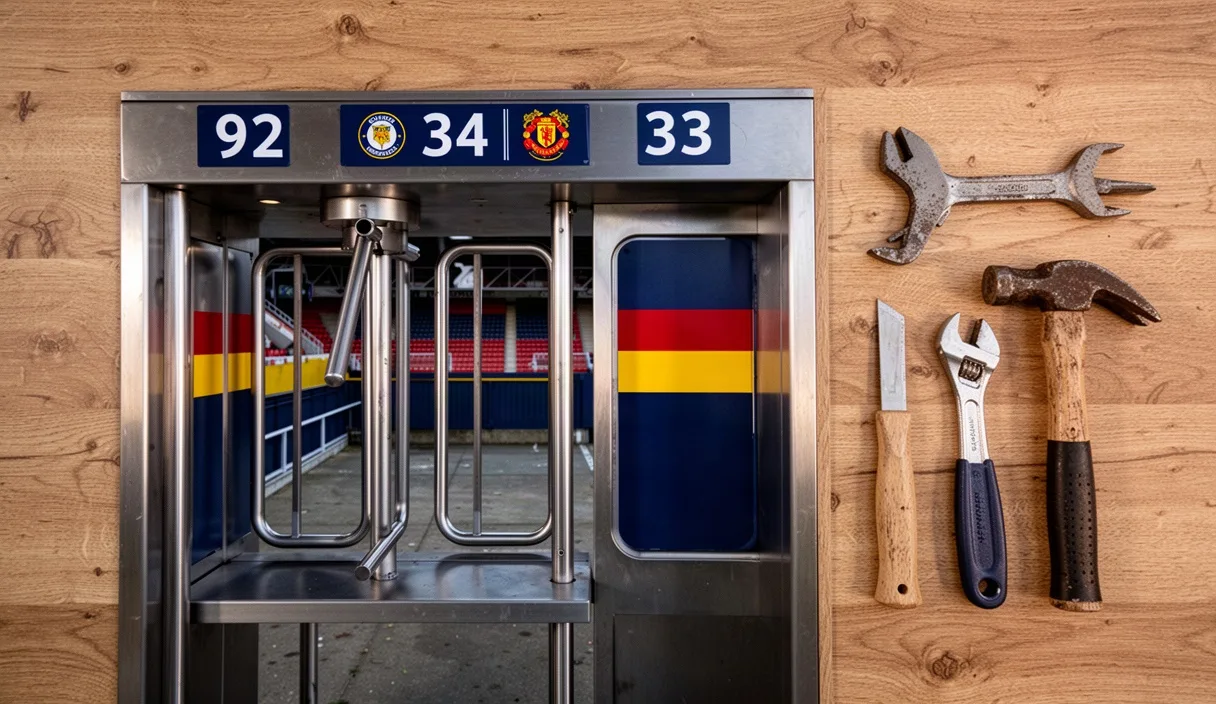
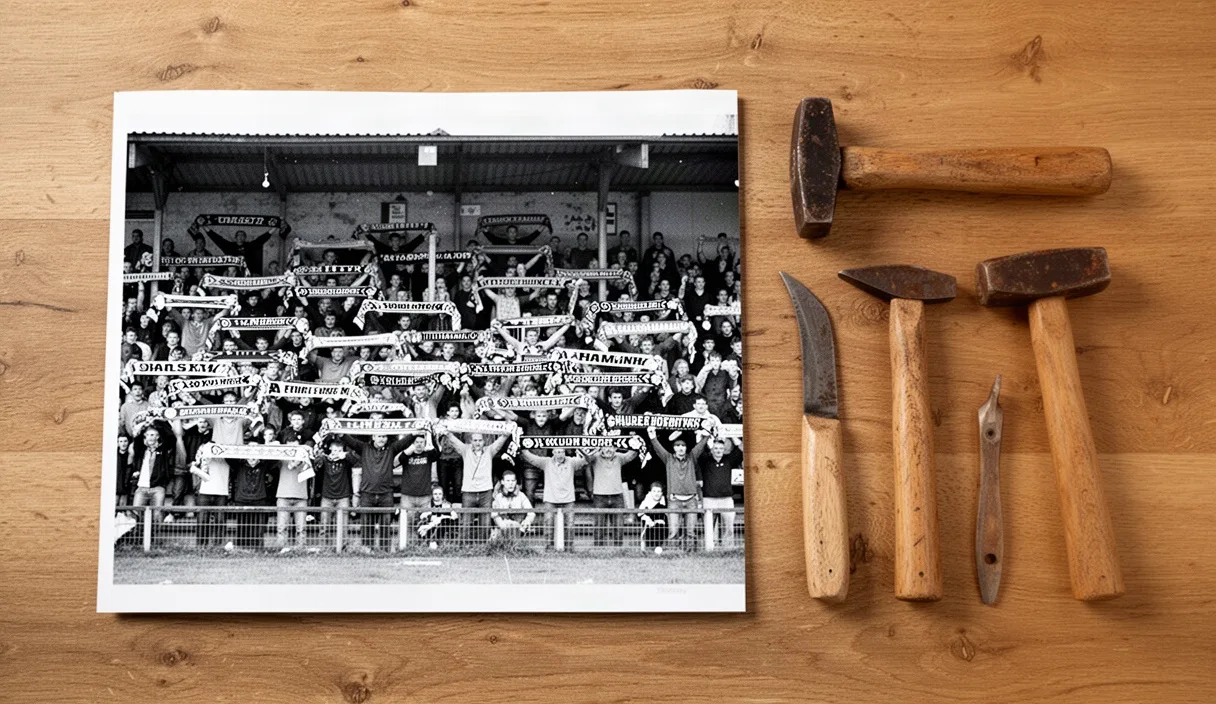
Ask anyone who has queued outside a ground on a wet Saturday afternoon and they will tell you the same thing: the turnstile you walk through decides your whole afternoon. Get it wrong and you are not just in the wrong seat, you are stood among strangers singing a different song to yours, with a steward already clocking your scarf. Every ground in the country, from the biggest Premier League bowl to the tightest non-league enclosure behind the chip van, is carved up into sections that tell you who belongs where.
None of this is arbitrary bureaucracy dreamed up to annoy fans. The split between home end and away end, and the maze of numbers, letters and colours that get you there, exists because grounds have learned hard lessons over decades about what happens when it is not done properly. This piece walks through how the system works, why it is taken so seriously, and what to do if you find yourself on the wrong side of the fence.
Why Grounds Are Split Into Ends at All
The basic idea is old and, if you strip away the modern signage, quite simple: keep the two sets of supporters apart so that rivalry stays on the pitch and in the songs rather than spilling into the concourse. Most English grounds still follow the traditional layout of four stands, often called ends and sides, with the away allocation usually confined to one end or one corner block rather than scattered throughout the ground.
The away end is rarely the biggest or the best positioned. It is often chosen because it can be sealed off easily, with its own turnstiles, its own stairwells and, ideally, no shared concourse with home areas. At a place like a mid-table Championship ground, that might mean visiting fans get a stand with a slightly worse view of the pitch, tucked behind one goal, simply because that section has a gate that can be locked independently of the rest of the stadium.
Segregation also has a practical policing dimension. Local safety advisory groups, made up of club officials, police representatives and the local council, review the allocation before each season and can adjust it depending on fixture risk. A local derby might see a smaller away allocation and extra segregation than a routine midweek cup tie against a team with a small travelling support, even though the ground layout does not change.
Reading Turnstile Numbers and Letters Correctly
Every ticket carries a code, and that code is not decoration, it is your route into the ground. A typical away ticket might read something like "Block 34, Turnstile G, Row 12, Seat 8". Each part of that string matters and skipping straight to "Row 12" without checking the turnstile letter is the single most common reason fans end up walking the wrong way around a ground.
Turnstiles are usually numbered or lettered in sequence around the perimeter of the stadium, and the away end will have its own dedicated run of them, physically separated from the home turnstiles by fencing, a car park, or sometimes a full street. At a ground like Elland Road or St James' Park, the away turnstiles sit at the far end of the stadium, often with their own signposted walking route from the train station that deliberately avoids the main home approach roads.
Practical steps for reading a ticket correctly:
- Check the turnstile letter or number first, before looking at seat details, since it tells you which side of the ground to head for.
- Match the block number to the printed stadium map on the club website, not just the verbal directions from a mate who went last season, since blocks occasionally get renumbered after redevelopment.
- Look for the word "away" or the visiting club's crest printed near the turnstile number, since some clubs colour-code this directly on the ticket.
- If travelling by coach, note that some grounds have a dedicated away turnstile block accessible only from a specific car park, meaning parking in the wrong area adds a long walk around the outside of the ground.
What Colour Coding and Flags Usually Signal
Most clubs use colour on tickets, wristbands and signage to make segregation obvious at a glance, useful for stewards scanning a queue quickly rather than reading every ticket in detail. A common approach is home tickets printed in the club's main colour, away tickets printed in a neutral or contrasting colour such as grey or yellow, and neutral or family areas marked in a third colour again.
Outside the ground itself, flags and bunting along the approach roads often mark the boundary of the segregation zone rather than just decoration. A run of home-club flags stops abruptly at a certain point on the road, and that point is usually where stewards expect away fans to peel off toward their own entrance. Locals who have been going for years read these markers without thinking, but it is worth pointing out to a first-timer that the flags are functional as well as festive.
| Signal | What it usually means | Where to look |
|---|---|---|
| Coloured wristband handed out at turnstile | Confirms which concourse and bar you can use inside | Given at the turnstile itself, keep it on until you leave |
| Different coloured ticket stock | Distinguishes home, away and neutral allocations at a glance | Printed border or background of the ticket |
| Painted line or fence colour change on approach road | Marks the edge of the segregated walking route | Pavement markings or temporary barrier tape |
| Steward high-vis with a different tabard colour | Indicates staff assigned specifically to segregation duty that day | Positioned near the boundary fences and concourse gates |
Segregation Lines and Why Stewards Take Them Seriously
Segregation is not just paint and fencing, it is written into each club's ground safety certificate, a legal document issued by the local authority under the Safety of Sports Grounds Act framework, and reviewed regularly. That means a steward moving you away from a fence line is not being petty, they are following a condition of the license that keeps the ground open at all. Breach it too often on matchday and the certificate itself can come under review.
Inside the stadium, the segregation line is often a strip of empty seats, a solid barrier, or a manned gangway rather than just an imaginary boundary. At some older grounds this strip is only a few rows wide, which is why even standing up and cheering too enthusiastically near the line can draw a steward's attention, since crowd surges near segregation points are exactly the scenario the certificate is designed to prevent.
Fans sometimes assume the rules relax for low-risk fixtures, but stewards generally apply the same line regardless of how friendly the atmosphere feels on the day. A quiet Tuesday night cup match against lower league opposition still uses the same segregation gate as the biggest derby of the season, because the certificate does not distinguish between fixtures, only the club's own risk assessment does, and that assessment is usually set weeks in advance.
Common Mix-ups Newcomers Make
New supporters, whether attending their first match or visiting an unfamiliar ground with their own club's away following, tend to make the same handful of errors:
- Walking to the nearest turnstile rather than the correct one, assuming any entrance will do since "it's the same stadium".
- Wearing home colours into what turns out to be the away section, or vice versa, after buying a ticket through a resale site that does not clearly mark allocation.
- Trying to sit with a friend who supports the other side by swapping seats once inside, unaware that stewards actively check for exactly this and can eject both parties.
- Assuming family stands are neutral ground for banter, when in fact most family sections carry their own, stricter code of conduct precisely because segregation is relaxed there.
- Following printed directions from an old matchday programme or outdated app listing, not realising the away turnstile moved after a stand redevelopment.
Common mistakes
Beyond the newcomer errors above, even seasoned fans slip up occasionally in ways worth flagging directly. Buying a ticket through an unofficial reseller without checking which end it covers is the costliest mistake, since clubs will not usually refund a ticket confiscated at the gate for being in the wrong section. Assuming that turnstile letters are consistent between different grounds in the same city or league is another trap, since there is no national standard, each club sets its own scheme.
Arriving late and rushing through the first open turnstile rather than the correct one causes more wrong-end incidents than any deliberate rule-breaking. Stewards see this pattern every matchday and, while they will usually redirect a genuinely confused fan calmly, persistent attempts to push through the wrong gate can be treated as a deliberate breach rather than an honest mistake.
What Happens If You End Up on the Wrong Side
If you realise you are in the wrong section before kick-off, the sensible move is to find the nearest steward immediately and explain calmly rather than trying to quietly shuffle out on your own, since unaccompanied movement near a segregation line tends to draw more attention than a fan openly asking for help. Most stewards have dealt with this exact situation many times and will walk you around to the correct gate, sometimes readmitting you without an extra charge if the mistake is clearly genuine.
If the mistake is only spotted once the match is underway, staying put and waiting for a natural break, such as half-time, is usually safer than moving mid-game, since sudden movement through a crowd near a segregation boundary is precisely what stewards are trained to watch for. Clubs generally will not eject a fan purely for an honest ticketing mix-up, but wearing the wrong team's colours in the wrong end can escalate matters faster, so it is worth covering up a scarf or shirt if possible while waiting for assistance.
For repeat visitors, keeping a simple habit solves most of this before it starts: check the turnstile letter on the ticket the moment it is bought, note it against the club's official stadium map rather than memory from a previous visit, and build in ten extra minutes to walk around the outside of the ground if the away entrance turns out to be on the far side. If a specific fixture carries extra restrictions, such as a reduced away allocation or a bubble match with coach-only travel, that information is usually published on both clubs' official sites in the week of the game, and it is worth checking rather than assuming last season's arrangement still applies.